Modernization and Globalization through Nakahama Manjiro (John Manjiro)
Massachusetts Museum of Contemporary Art (North Adams, Massachusetts, USA)
2026 Residency: MASS MoCA Residency (Full General Fellowship)
Residency period: June 4–30, 2026 (27 days)
Support: The Ogasawara Toshiaki Memorial Foundation
In June 2026, I took part in the residency program at MASS MoCA (Massachusetts Museum of Contemporary Art), one of the largest contemporary art museums in the United States. Taking as my starting point John Manjiro (Nakahama Manjiro, 1827–1898), who drifted across the Pacific in the late Edo period, I researched how modernization, globalization, and the history of this museum’s own buildings intersect.
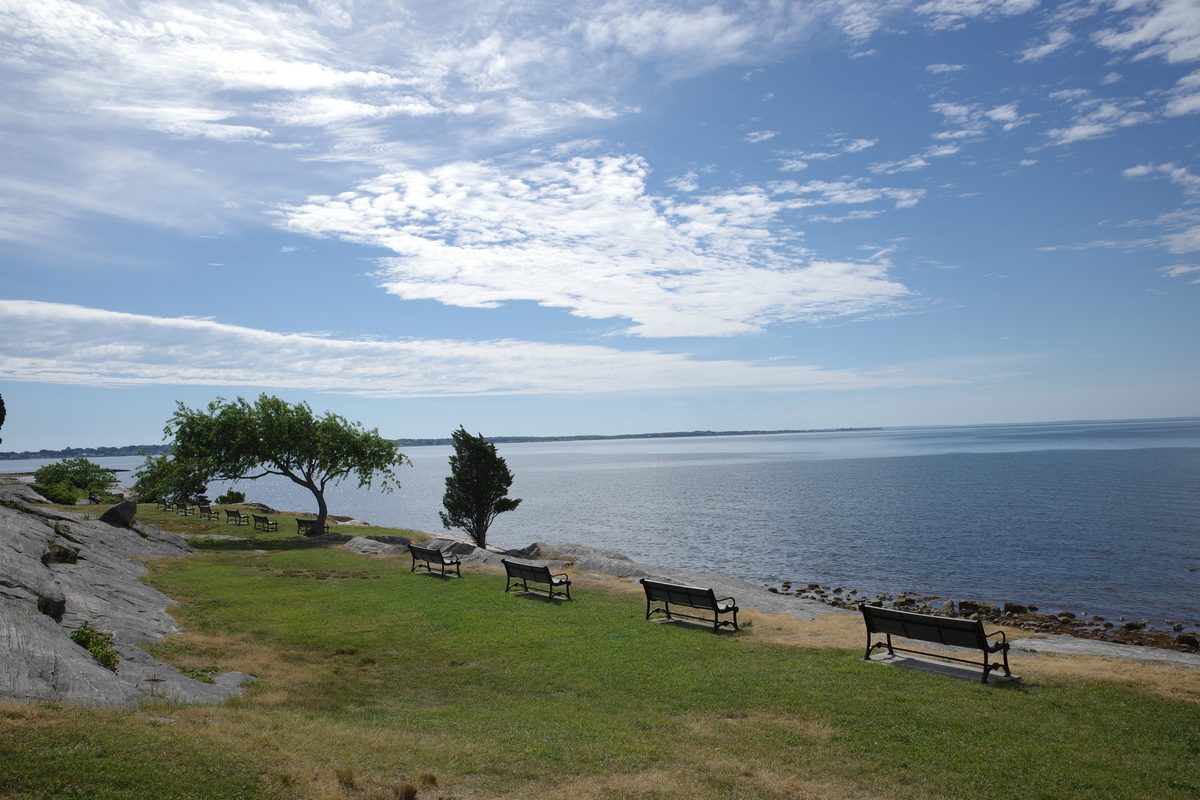
My work centers on movement, border-crossing, and chance. So when my residency at MASS MoCA was confirmed, the first person who came to mind was Nakahama Manjiro. Carried by an unintended drift to Fairhaven, Massachusetts, he became the first Japanese person to be educated in the United States.
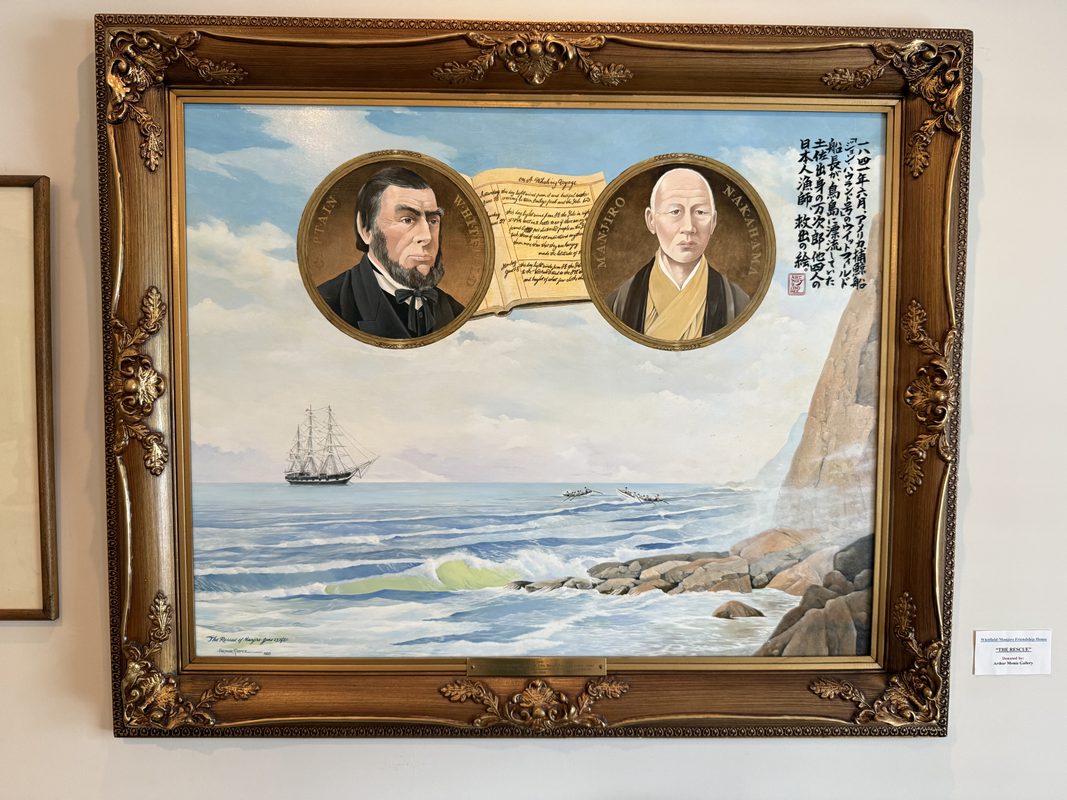
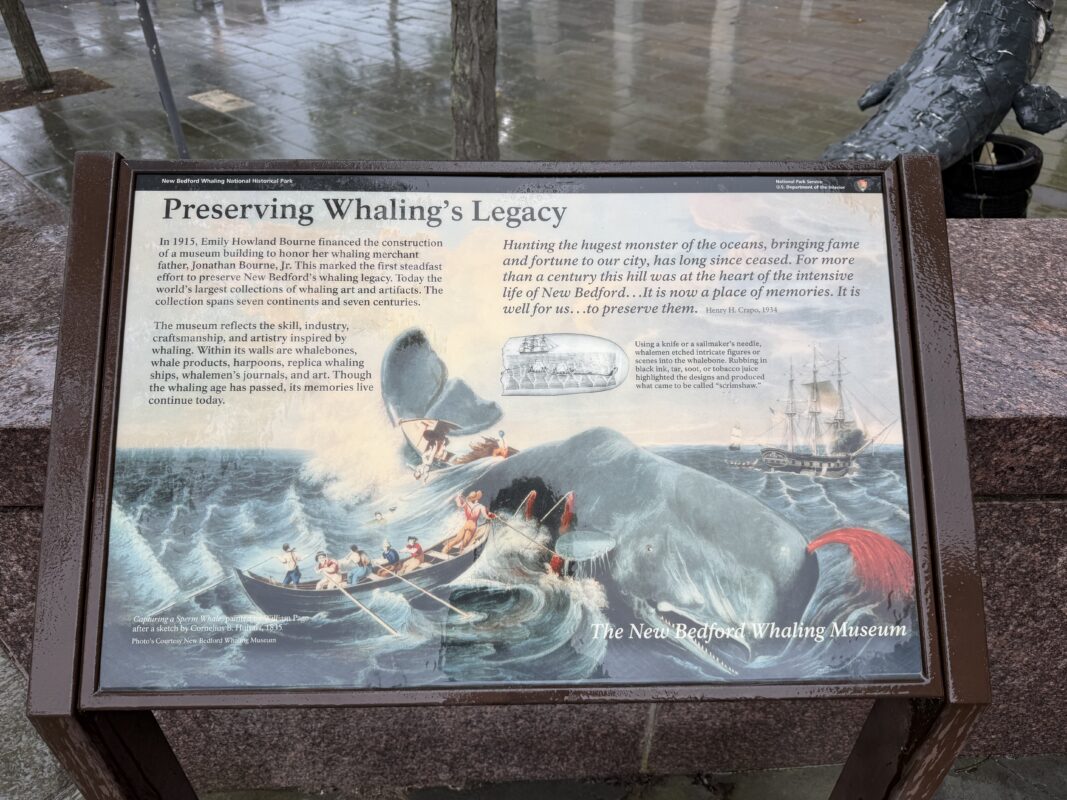
In January 1841, fourteen-year-old Manjiro set out fishing with his companions from Usaura in Tosa, was shipwrecked, and drifted ashore on the uninhabited island of Torishima. After surviving there for about five months, they were rescued by the American whaling ship John Howland. Because Japan was then under its policy of national seclusion and foreign ships could not enter its ports, they were first put ashore in Hawaii. Manjiro then chose, of his own will, to go on to Fairhaven, Massachusetts, Captain Whitfield’s hometown. There he acquired a wide range of knowledge and skills, from English to surveying, navigation, and whaling.
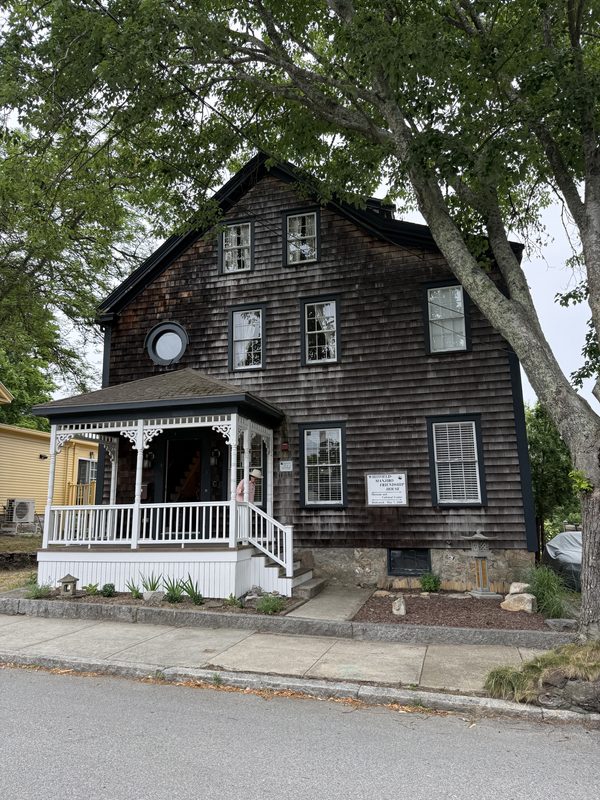
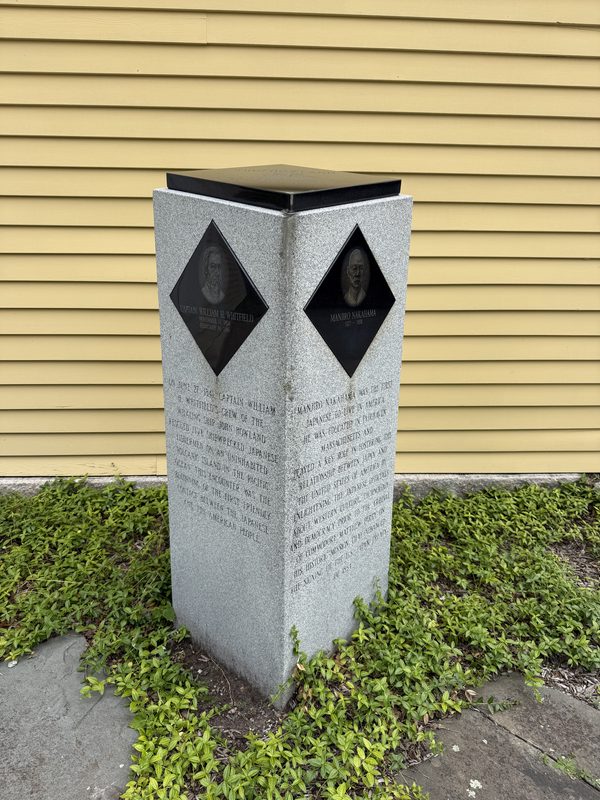
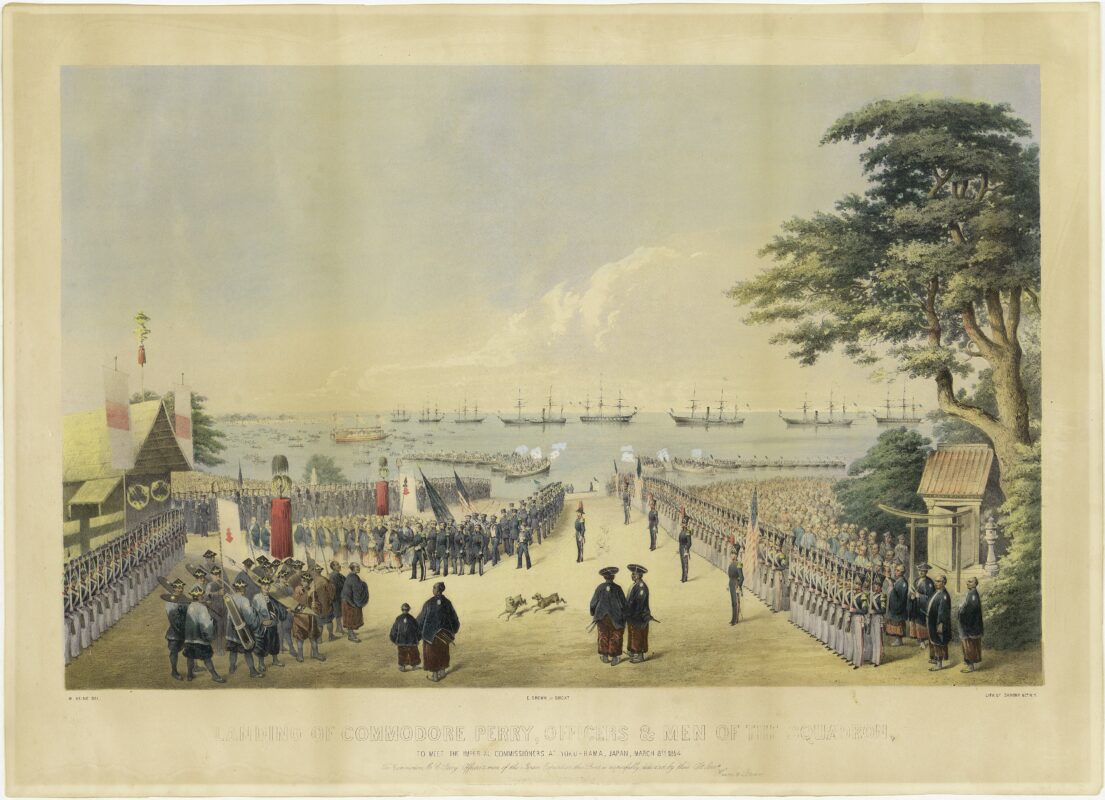
Coming from feudal Japan, what impressed Manjiro in America was a society in which people were valued not by their status but by their individual effort and ability. Democracy had already taken root in America, and presidents were chosen by election. Manjiro learned a great deal in America and sailed around the world as a whaler. After reuniting with his companions in Hawaii, he succeeded in returning to Japan in 1851, bringing with him Western navigation and English and making a major contribution to Japan’s modernization. Two years later, in 1853, Commodore Perry arrived at Uraga with his Black Ships.
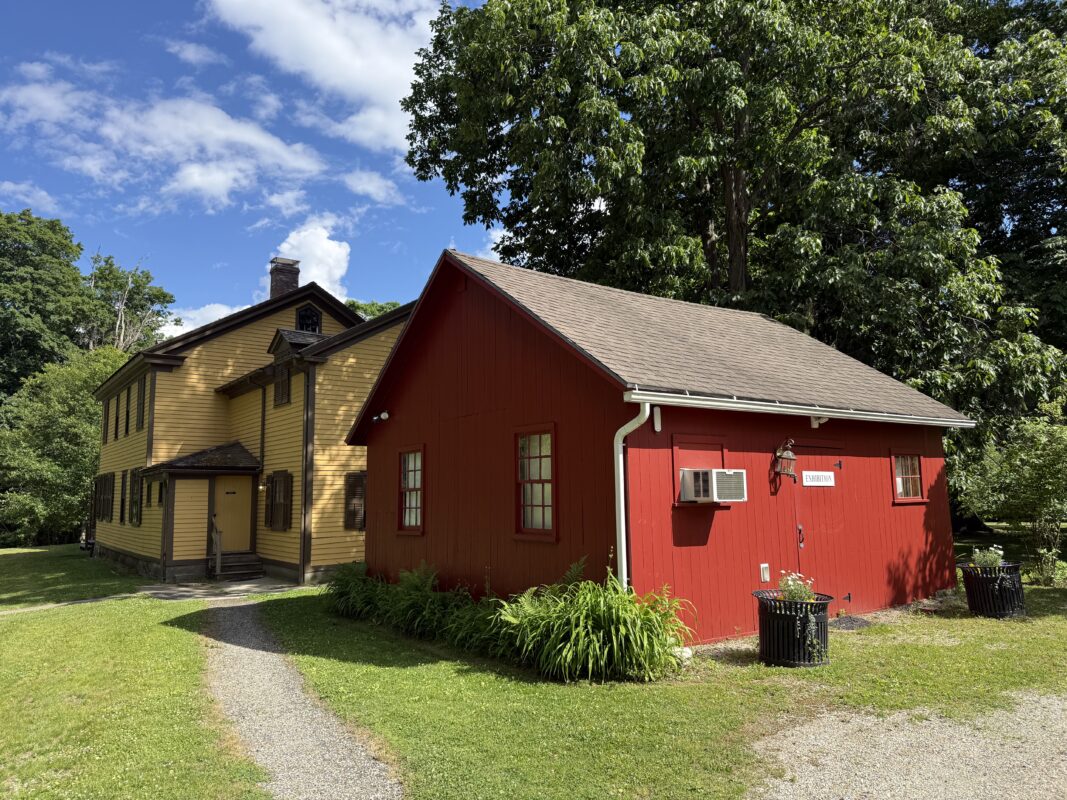
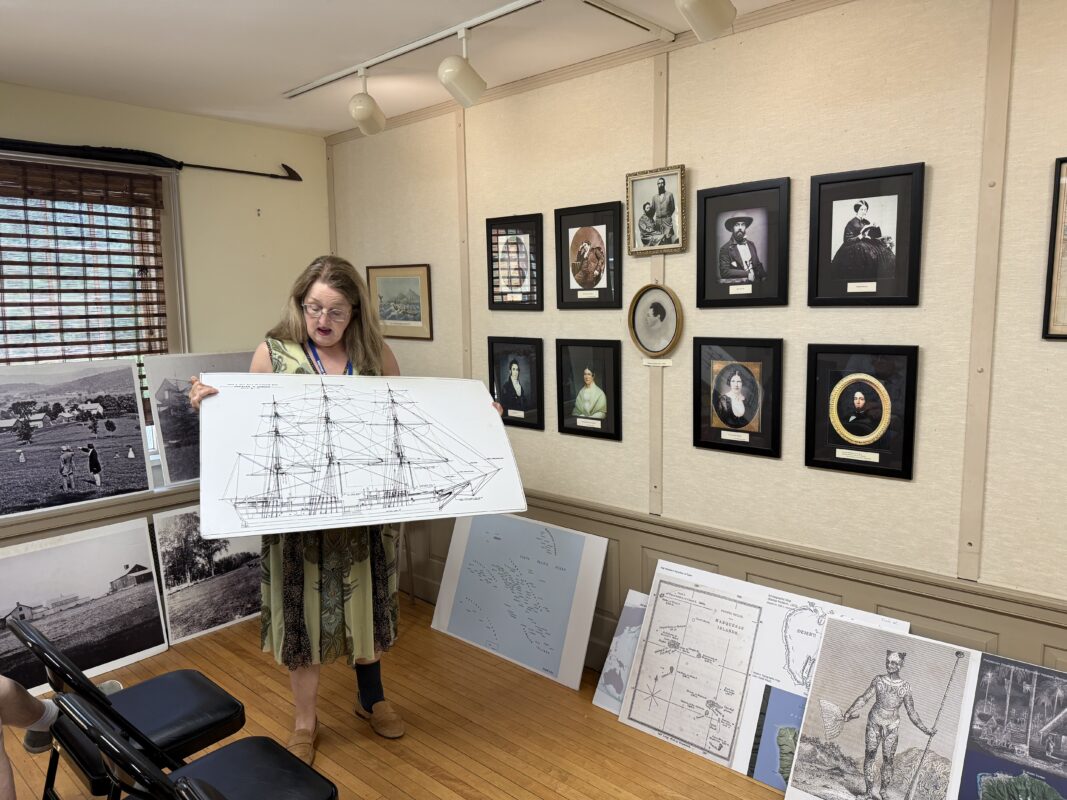
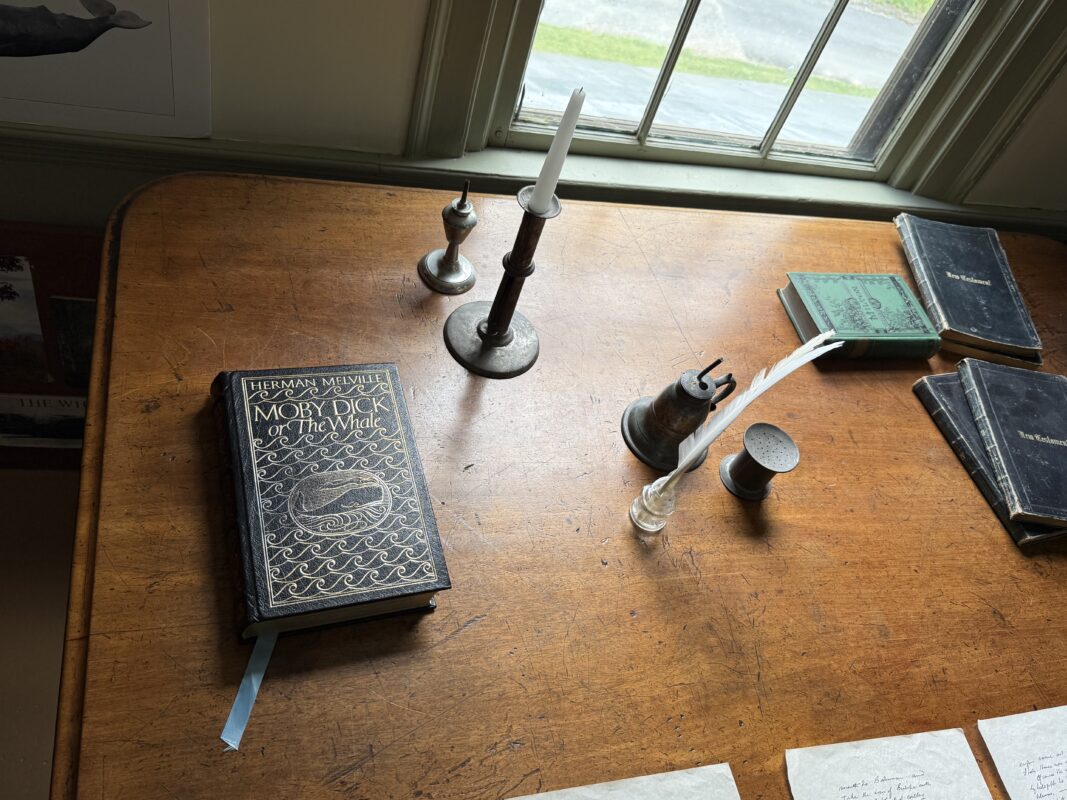
During my stay, I learned that Arrowhead, the house in Pittsfield—in the same Berkshire County as MASS MoCA—where the writer Herman Melville wrote Moby-Dick and other novels, still stands, and I went to visit it. Melville left Fairhaven aboard the whaling ship Acushnet on January 3, 1841—the same month in which Manjiro set out fishing from Usaura. Melville went to sea from the very port that Manjiro would reach at the end of his drift. And in 1851, the year Manjiro returned to Japan, Melville published Moby-Dick, now one of the defining works of American literature.
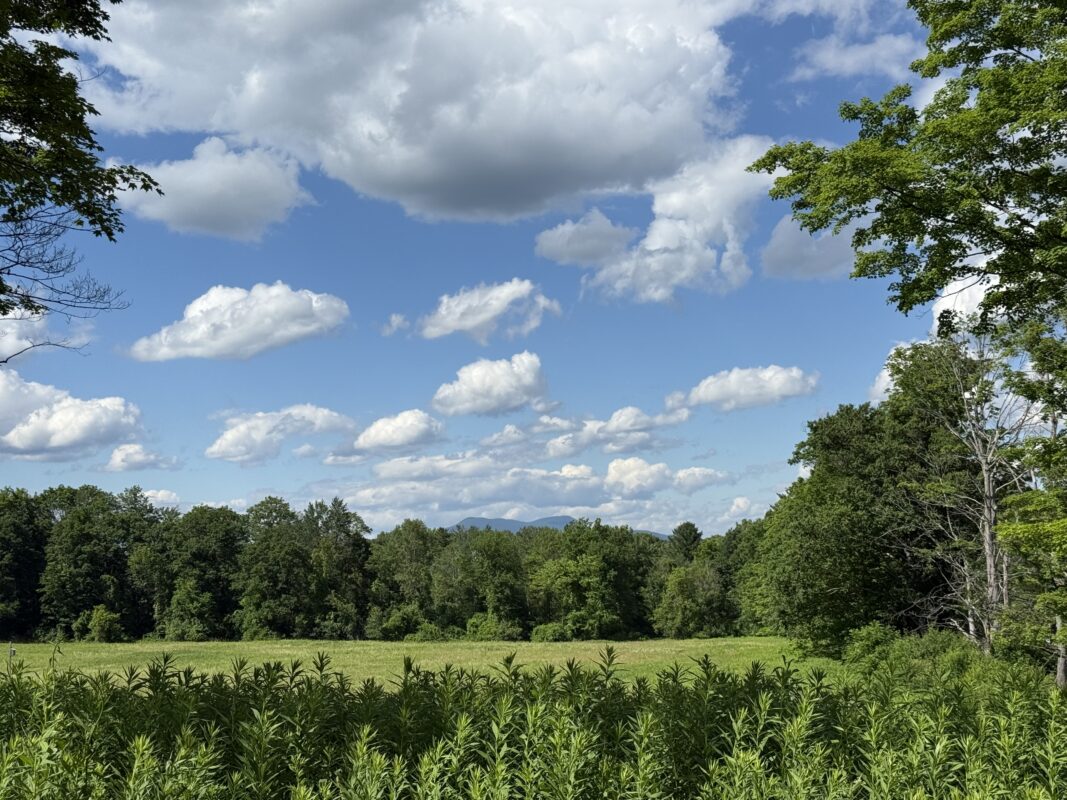
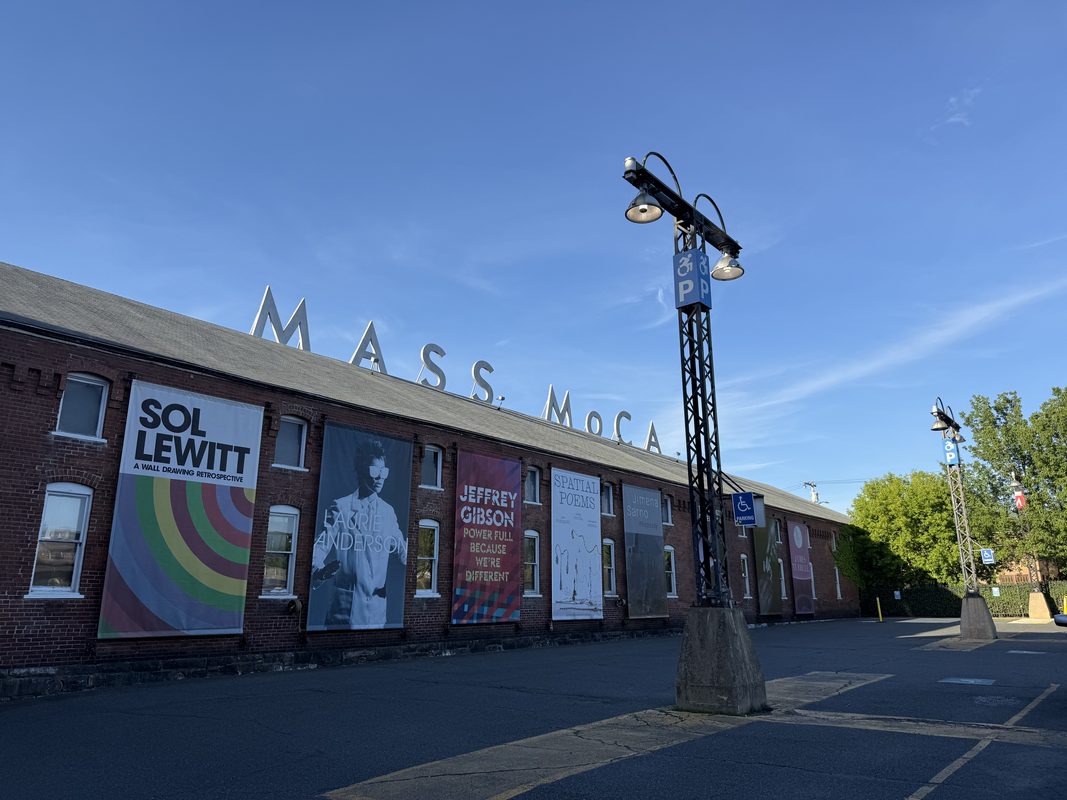
The vast complex of brick buildings at MASS MoCA where I stayed is also deeply bound up with the history of modernization—and that history is not unrelated to Japan.
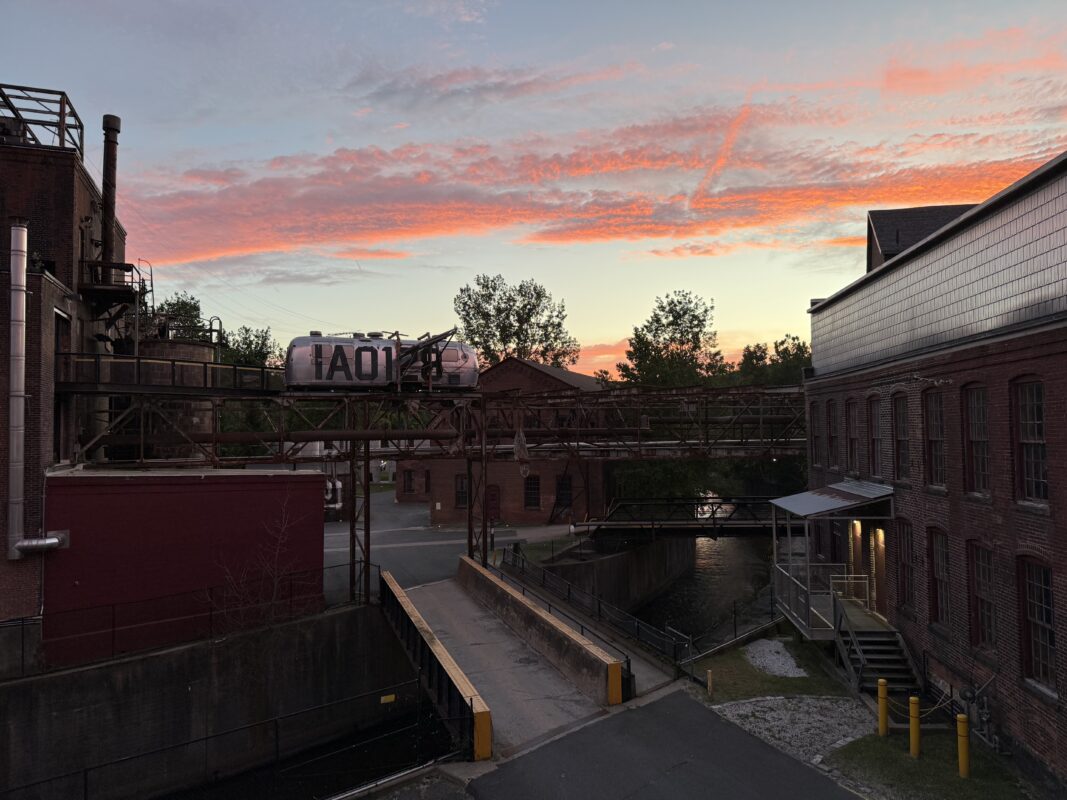
The buildings began as Arnold Print Works, a textile printing factory founded in 1860, which at its peak became one of the world’s leading manufacturers of printed fabrics. When the company ceased operations in 1942, the complex passed to the electrical components manufacturer Sprague Electric, which had moved to North Adams in 1930. By 1966, around a quarter of the town’s population is said to have worked for this single company.
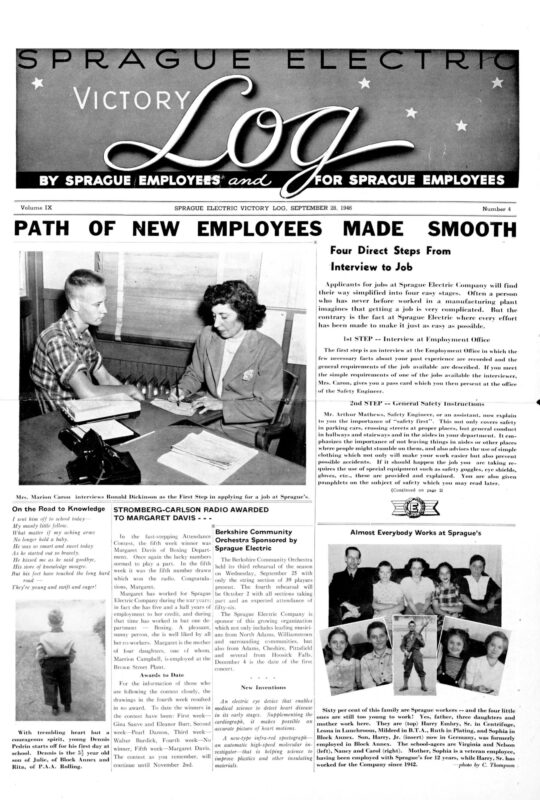
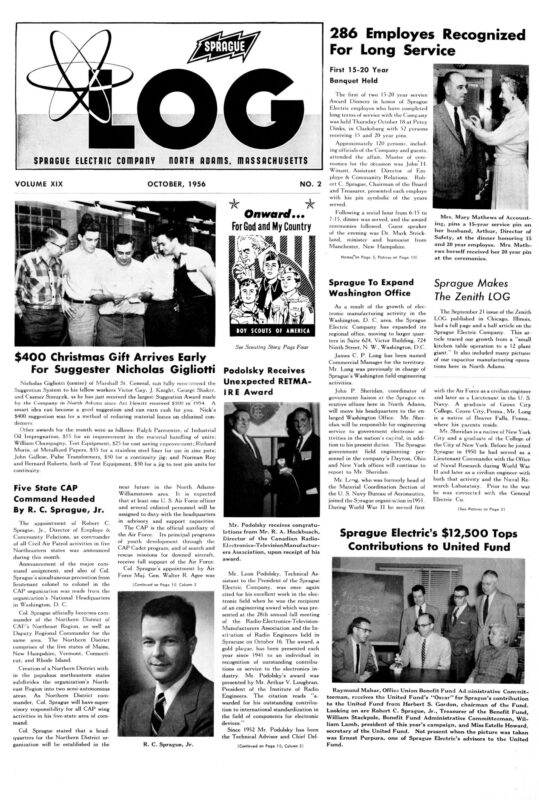
During the Second World War, at the request of the U.S. government, Sprague’s physicists and engineers designed and manufactured core components for cutting-edge weapons systems. One of those weapons systems was the atomic bomb dropped on Japan.
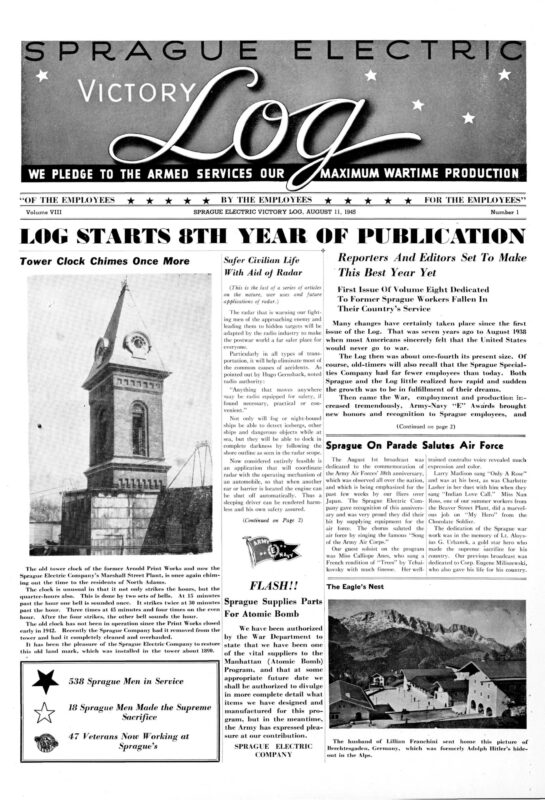
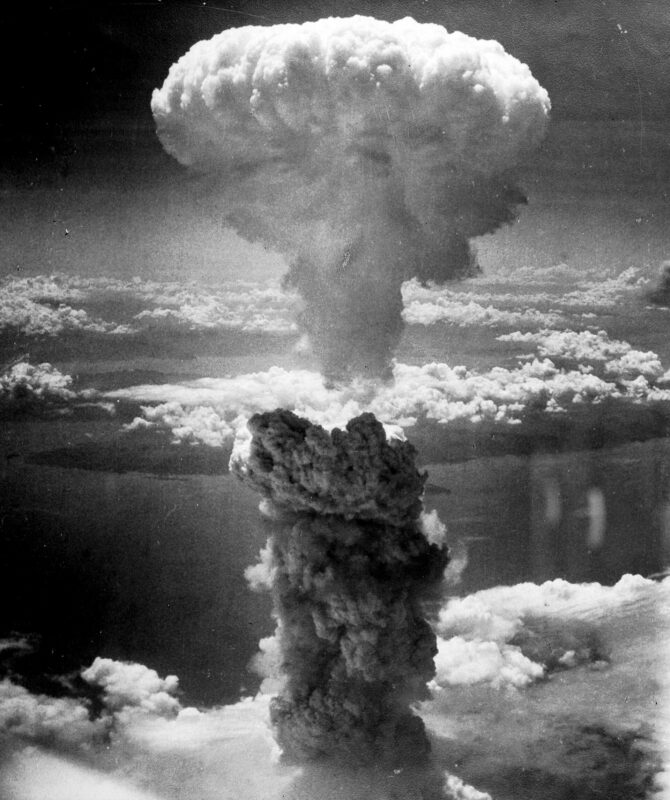
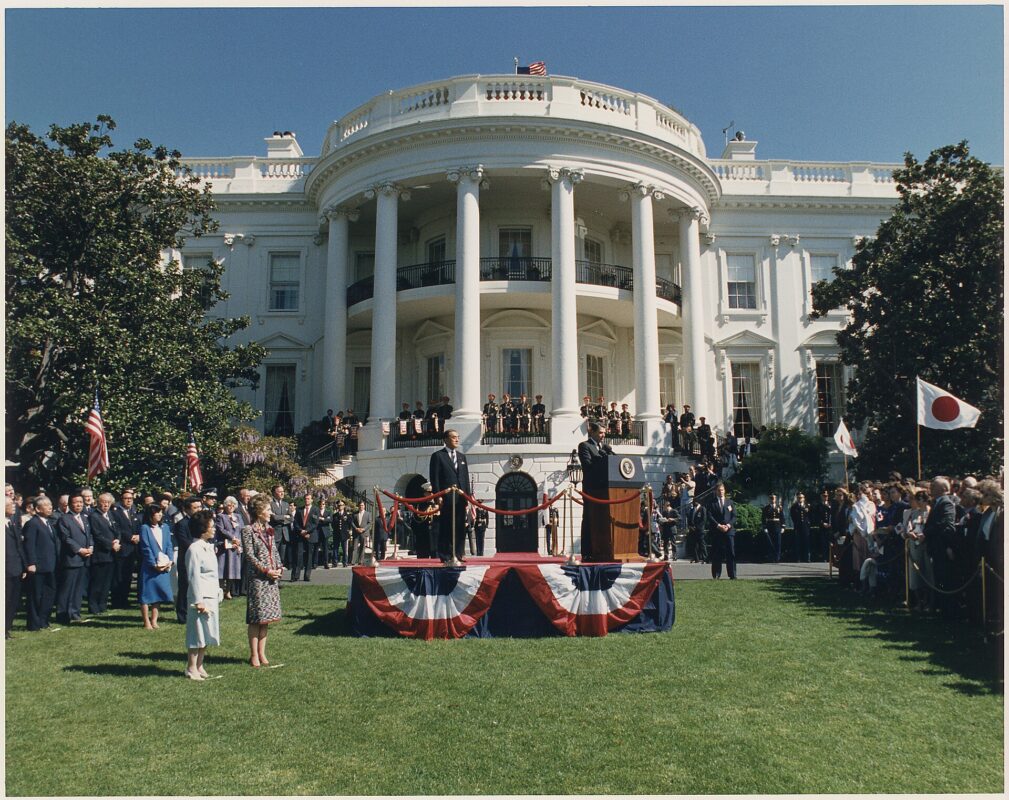
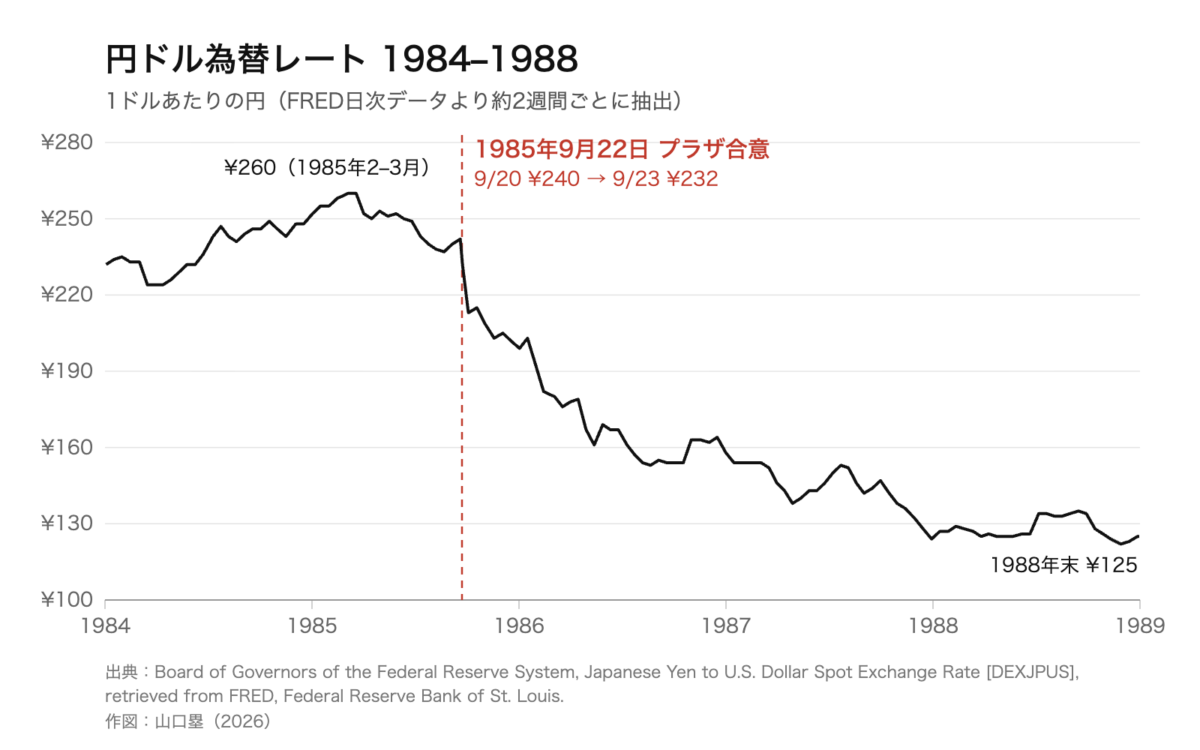
After the war, Japan recovered on the back of the special procurement demand generated by the Korean War. In the 1980s, Japanese and other foreign products rose to prominence as they became both inexpensive and high in quality, and the extreme strength of the dollar against the yen hit American manufacturing hard. In 1985, Sprague closed its North Adams plant. The Plaza Accord of September that year sought to correct exchange rates, but the town’s industry had already been lost.
As part of a plan to revitalize a town that had lost its industry, the factory complex was repurposed, and MASS MoCA opened in 1999. At the same time, it has also generated friction through gentrification, between working-class residents who lost their jobs and the art-world visitors and tourists who come from outside.
The question I carry with me is this: what, in the end, are modernity and globalization?
As a Japanese person, I want not only to study the history surrounding the atomic bomb but also to understand the motives that drove people to develop it. I believe that the desire for “faster, farther, more” drove modernization as its energy sources shifted from whale oil to coal, oil, electricity, and finally nuclear power, became entwined with colonialism and imperialism, and eventually led to war. Manjiro’s drift took place in the very midst of this current. The whaling ship that rescued him was, at the time, on the front line of resource extraction, roaming the world’s oceans in search of whale oil for lamps and machine lubricant.
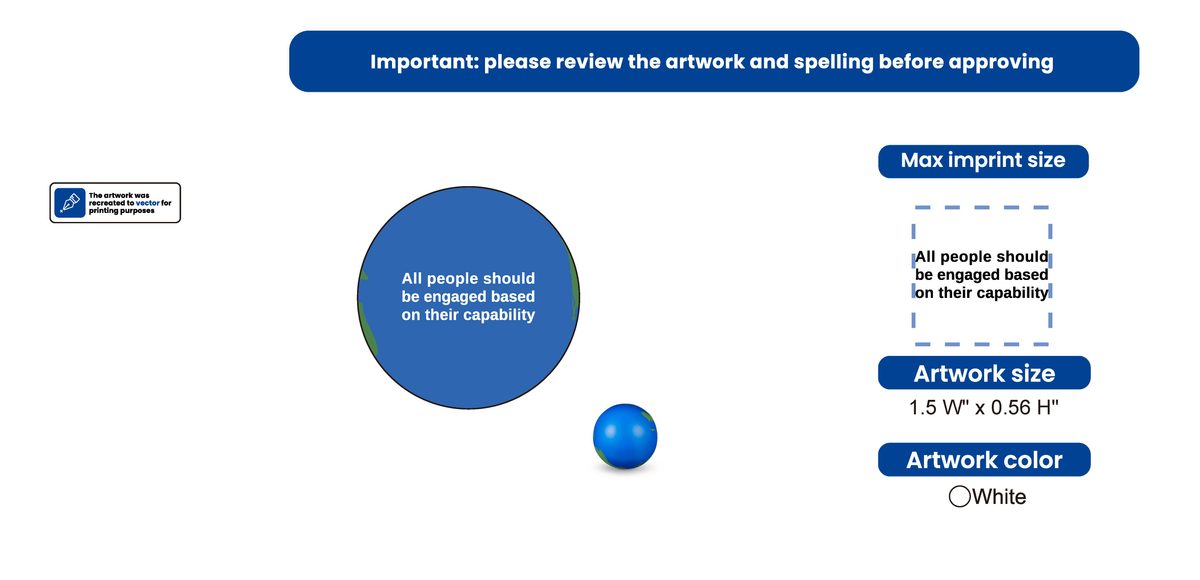
And the society Manjiro found in America—one in which people were valued not by birth but by ability—must surely have been a source of hope for him at the time. But where is that ideal heading now? If you search Google in Japanese for “John Manjiro famous quotes,” one phrase that often comes up is “All people should be engaged based on their capability.” Strictly speaking, however, it is inaccurate to attribute these words to Manjiro himself. He left no autobiography or collection of sayings, and everything handed down as his words has passed through the records of third parties.
*The “society in which individual ability and effort are valued” was, in the context of its time, an ideal that applied mainly to white men. To set aside the contradictions of American democracy at the time—such as the enslavement of Black people and the persecution of Native Americans—and portray meritocracy purely as “hope” would be to romanticize and oversimplify the complexity of history.
What this phrase expresses is the idea of meritocracy: that where people work, what position they hold, and what they are paid should be determined not by family background or status but by individual ability and effort. A society that engages people according to their ability is, conversely, also a society that treats even losing one’s job as a consequence of one’s own ability. In the 1980s, the Reagan administration pursued neoliberal policies that championed market freedom and individual responsibility. Freedom and responsibility are meant to go together, but when even structural events—such as a town losing its industry to the tide of globalization—are framed as a matter of individual effort, responsibility turns into what in Japanese is called jiko sekinin, or self-responsibility. The political philosopher Michael Sandel argues that this kind of meritocracy breeds hubris among the winners and humiliation among the losers, and that it laid the ground for the backlash seen in Donald Trump’s election in 2016. The hope that Manjiro found in this country some 180 years ago is now discussed as one of the causes of America’s divisions.
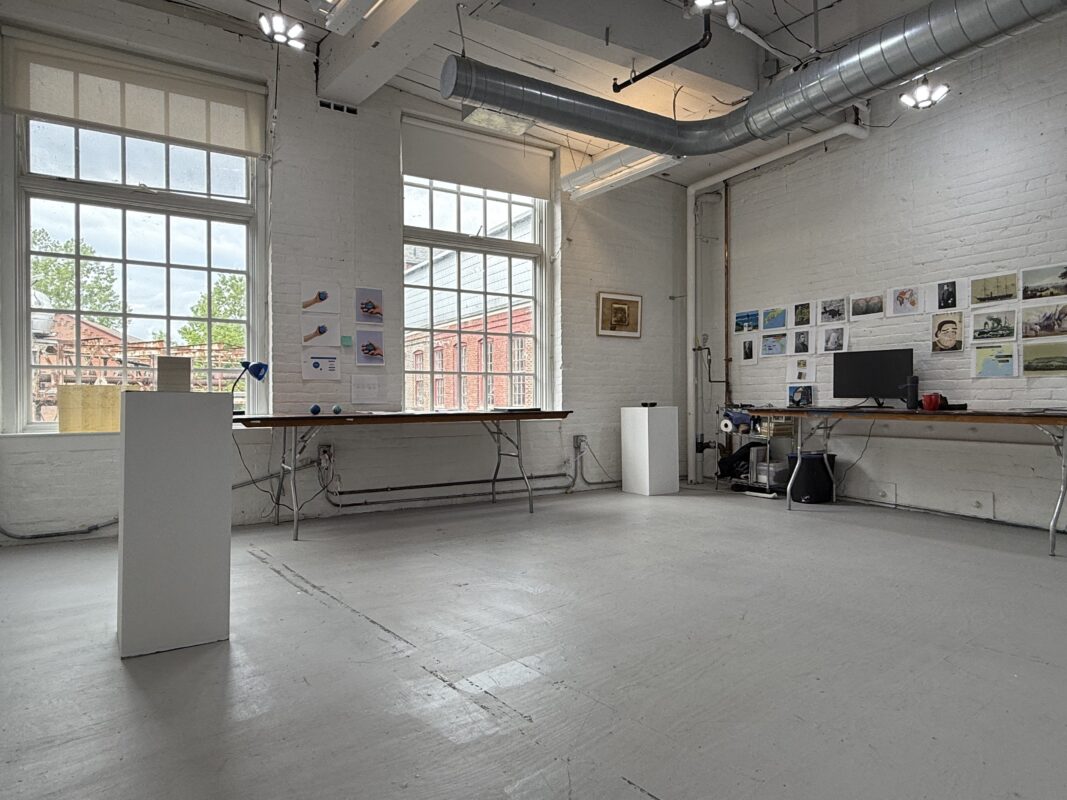
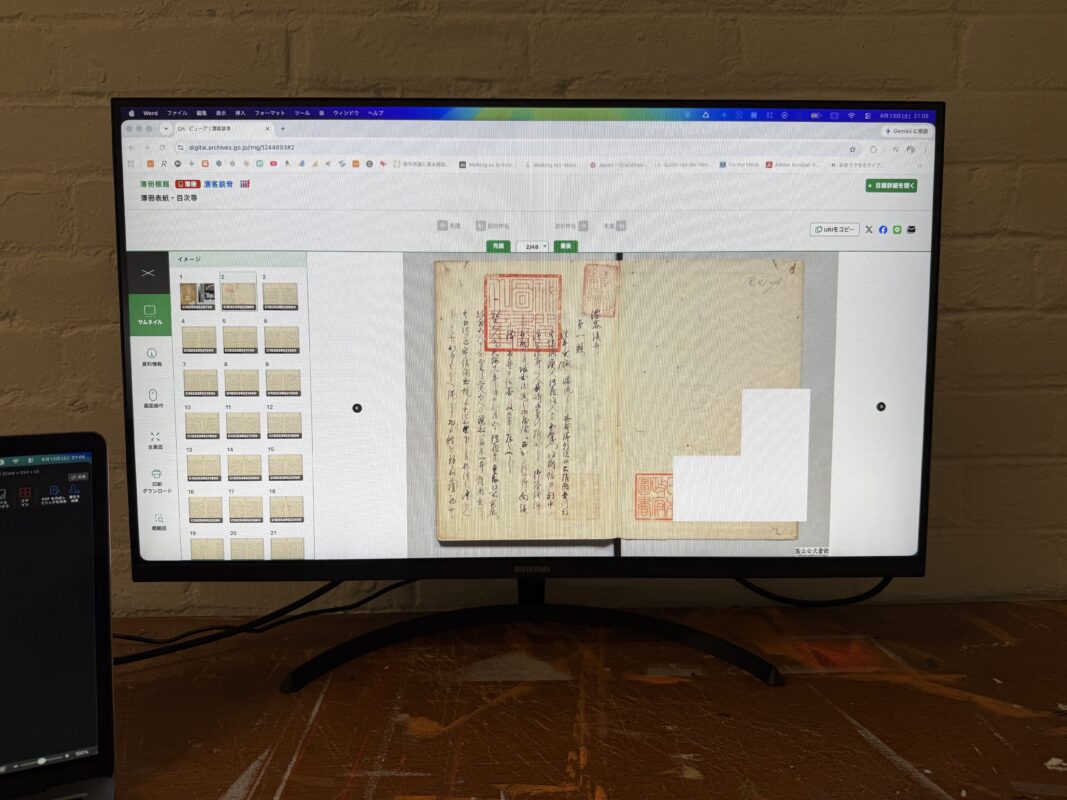
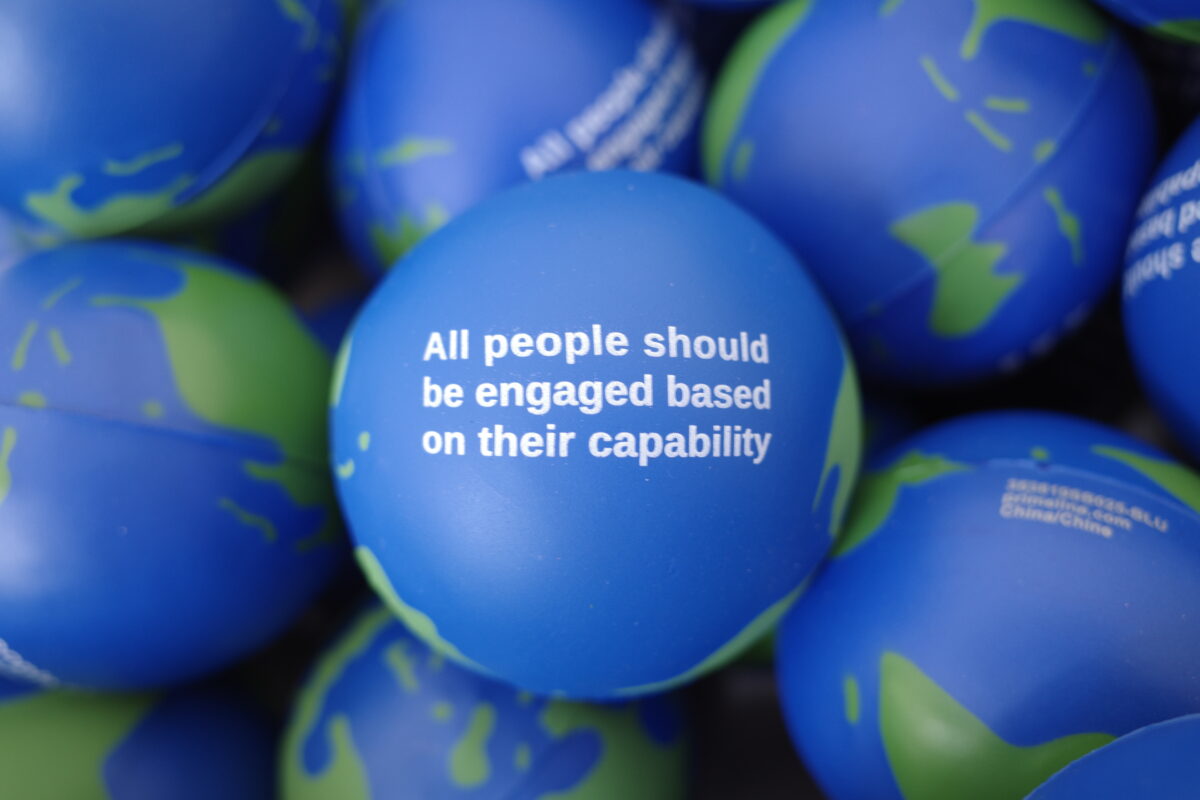
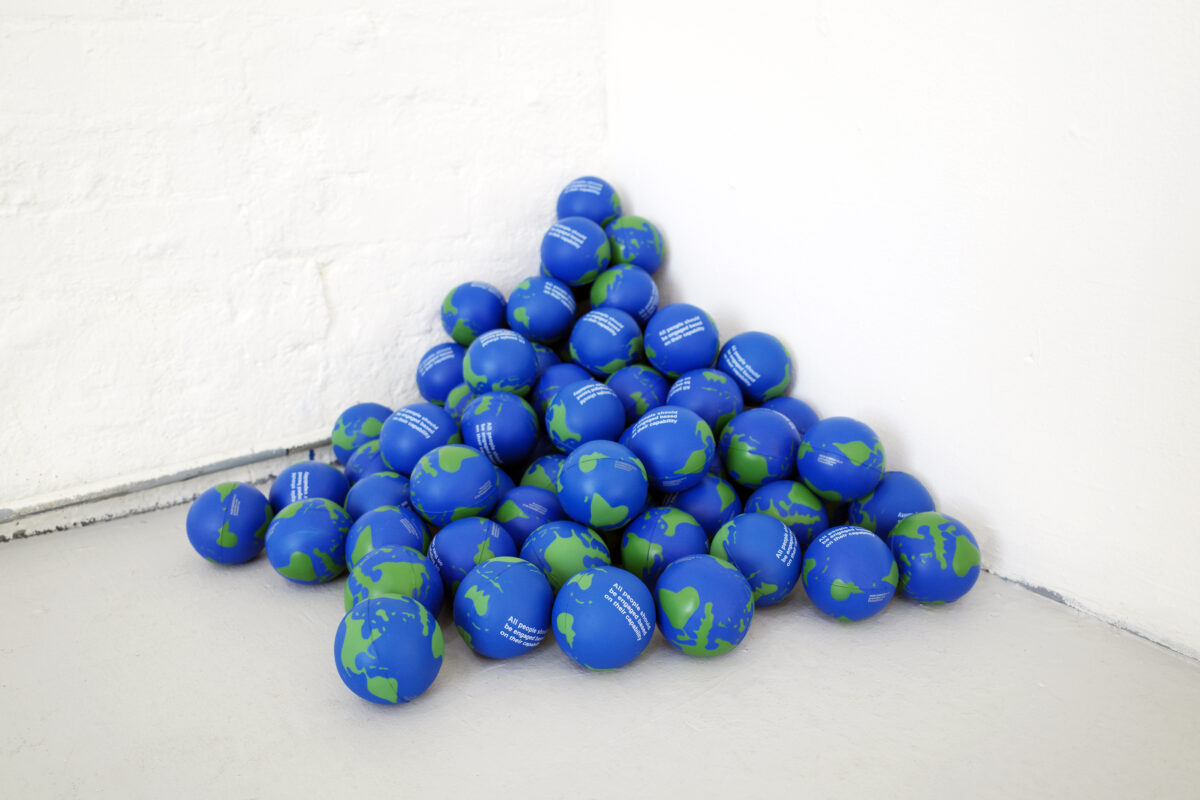
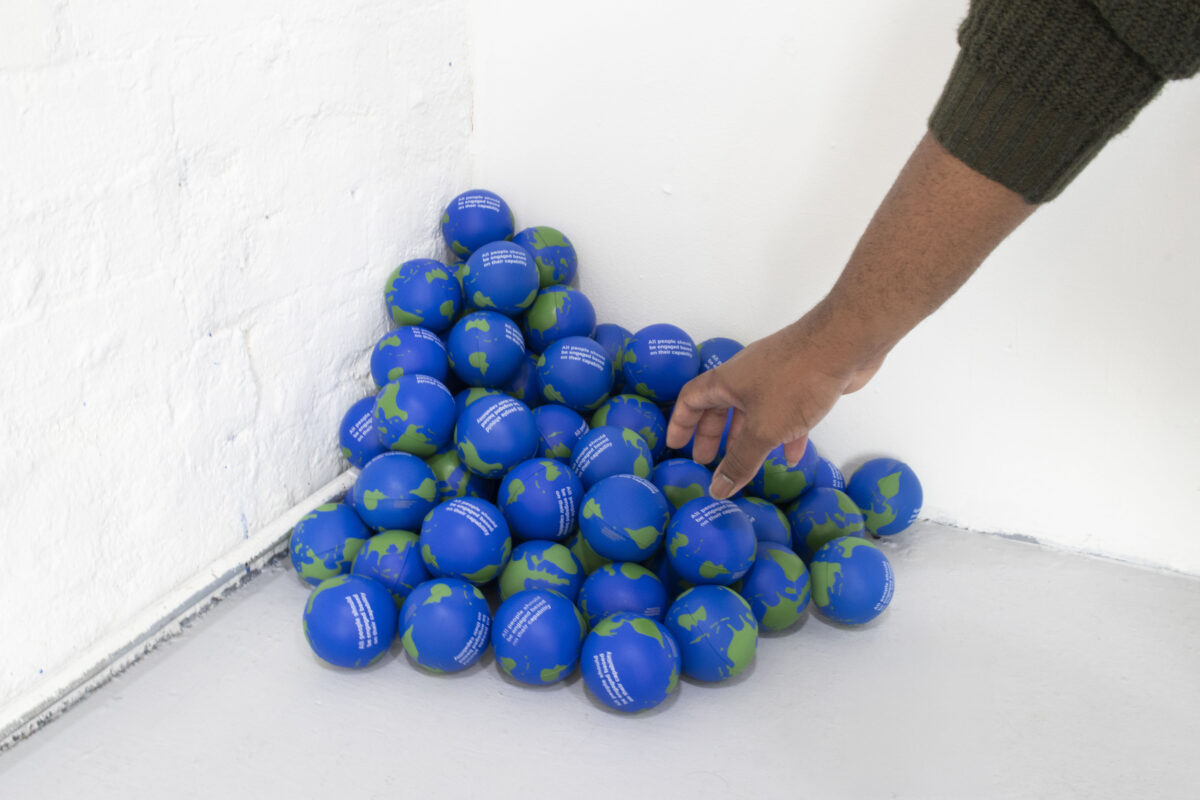
I deliberately chose to make a work that quotes the text “All people should be engaged based on their capability.” The very fact that it is presented as a famous saying of Manjiro’s seemed to me to show how deeply we have internalized meritocracy. As my material, I chose the stress ball. Cheap to mass-produce, and kept on desks and in homes where it stays in view for a long time, it has become a staple of American corporate promotional merchandise because of its cost-effectiveness. With the help of American collaborators, I translated Manjiro’s words into English, printed them on globe-shaped stress balls, and presented the piece at the MASS MoCA Open Studios as a work of relational art that visitors could take home.
In the presentations I gave during my stay, hardly anyone knew of Manjiro or even Perry, and his life—which began with a shipwreck and ended up linking Japan and the United States—was received with surprise. By contrast, the response to the part about the atomic bomb was muted, and I felt that an event of great significance for Japan was being received in America as just one event among many.
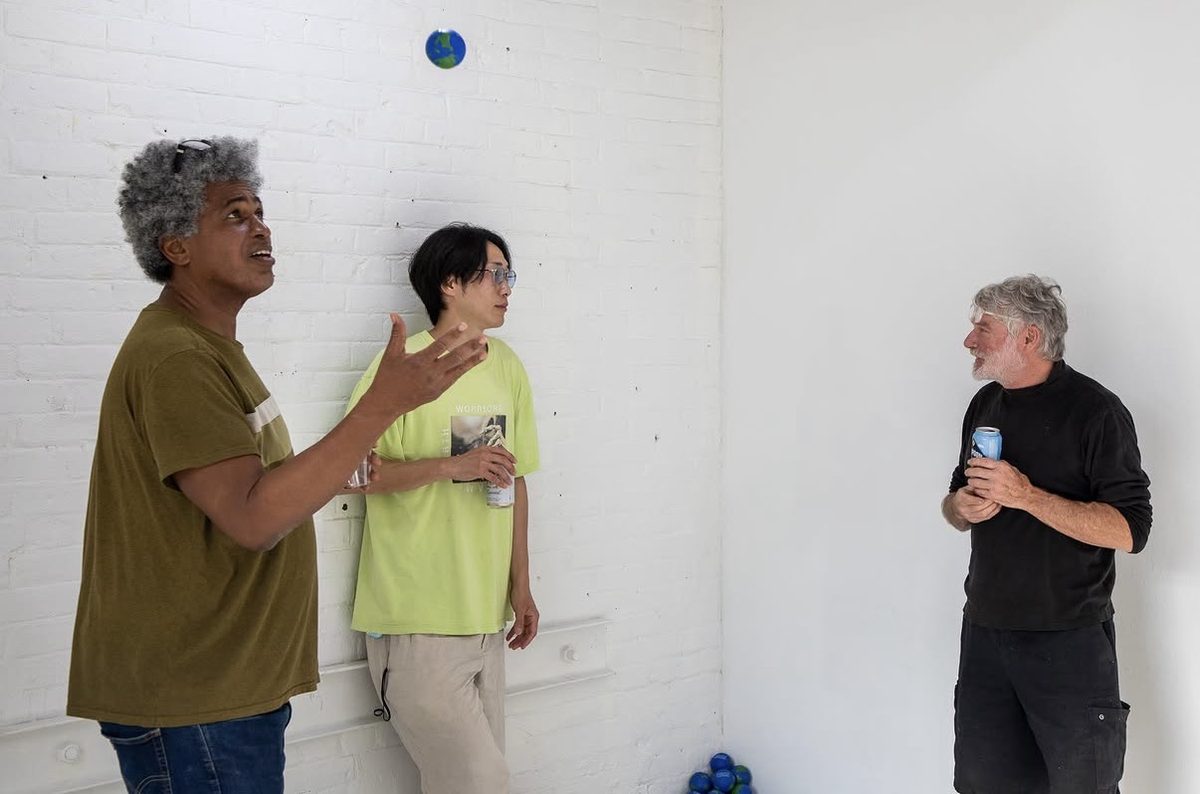
I feel fortunate to have been able to stay in North Adams, home of MASS MoCA, as well as in Fairhaven and New Bedford, in the year of America’s 250th anniversary. This residency has only added to the materials I need to examine and the places I still need to visit. Taking the questions and experiences it gave me as my guide, I will continue my research and practice.
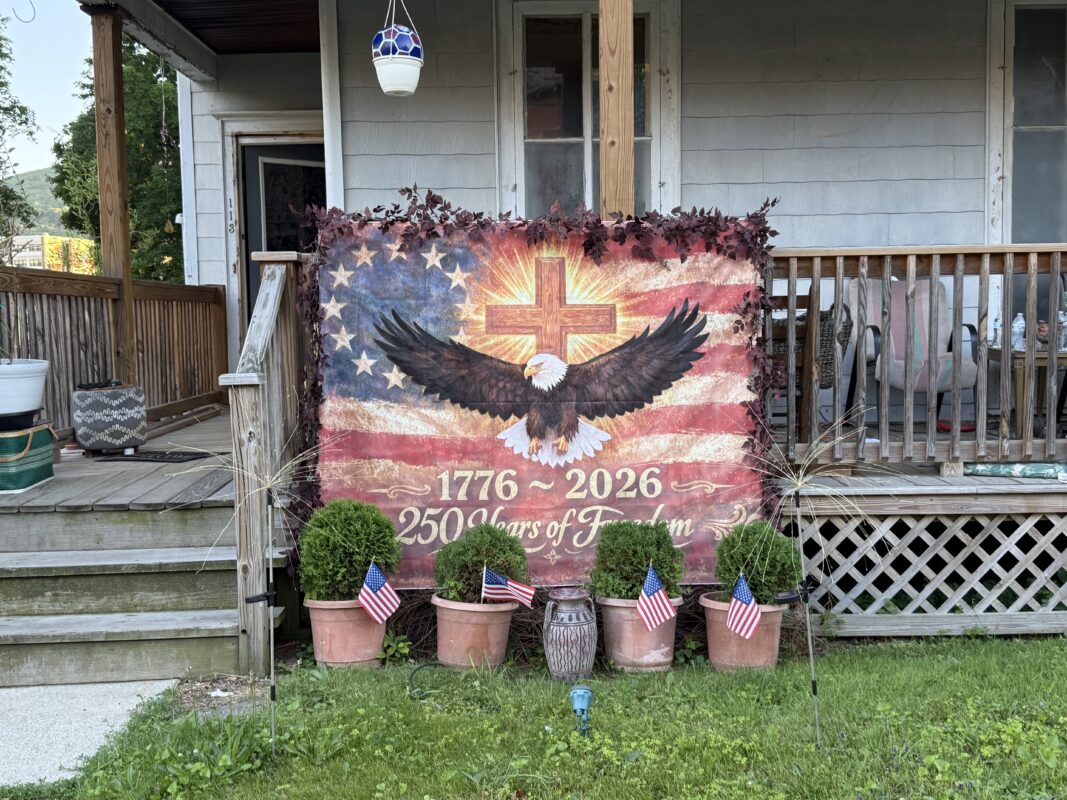
Image credits
- The Sprague Log, Vol. 8, No. 1 (August 11, 1945); Vol. 9, No. 4 (September 28, 1946); Vol. 19, No. 2 (October 1956). Sprague Electric Co. Digitized by MCLA Freel Library / Internet Archive. Public domain. — 1945 / 1946 / 1956 / Sprague Log archive
- Landing of Commodore Perry, Officers and Men of the Squadron, to Meet the Imperial Commissioners at Yoku-Hama, March 8th, 1854. Lithograph by Eliphalet M. Brown Jr. after Wilhelm Heine, 1855. National Portrait Gallery, Smithsonian Institution. Wikimedia Commons. Public domain.
- Mushroom cloud over Nagasaki, August 9, 1945. Photo: Charles Levy. Wikimedia Commons. Public domain.
- President Reagan at the White House State Visit of Prime Minister Nakasone, April 30, 1987. White House Photographic Office. National Archives photo no. 198583. Wikimedia Commons. Public domain.
- Yen–dollar exchange rate chart: FRED (DEXJPUS), Federal Reserve Bank of St. Louis. Chart by Rui Yamaguchi.