European Capital of Culture GO! 2025 — Toasting a Sandwich on the Border
Buzz Cultural Association Residency
Buzz Cultural Association (Gorizia, Italy / Nova Gorica, Slovenia)
May 2025
Residency: European Capital of Culture GO! 2025
In May 2025, I took part in AROUND, an artist residency organized by Buzz Cultural Association (Associazione Culturale Buzz), a cultural organization based in Udine, Italy. The program was part of GO! 2025, the European Capital of Culture held jointly across a national border for the first time, by Nova Gorica (Slovenia) and Gorizia (Italy). Four artists spent four days working on the theme of the border. The resulting works were delivered as digital video or audio pieces and placed as pins on AROUND’s interactive map of the region.
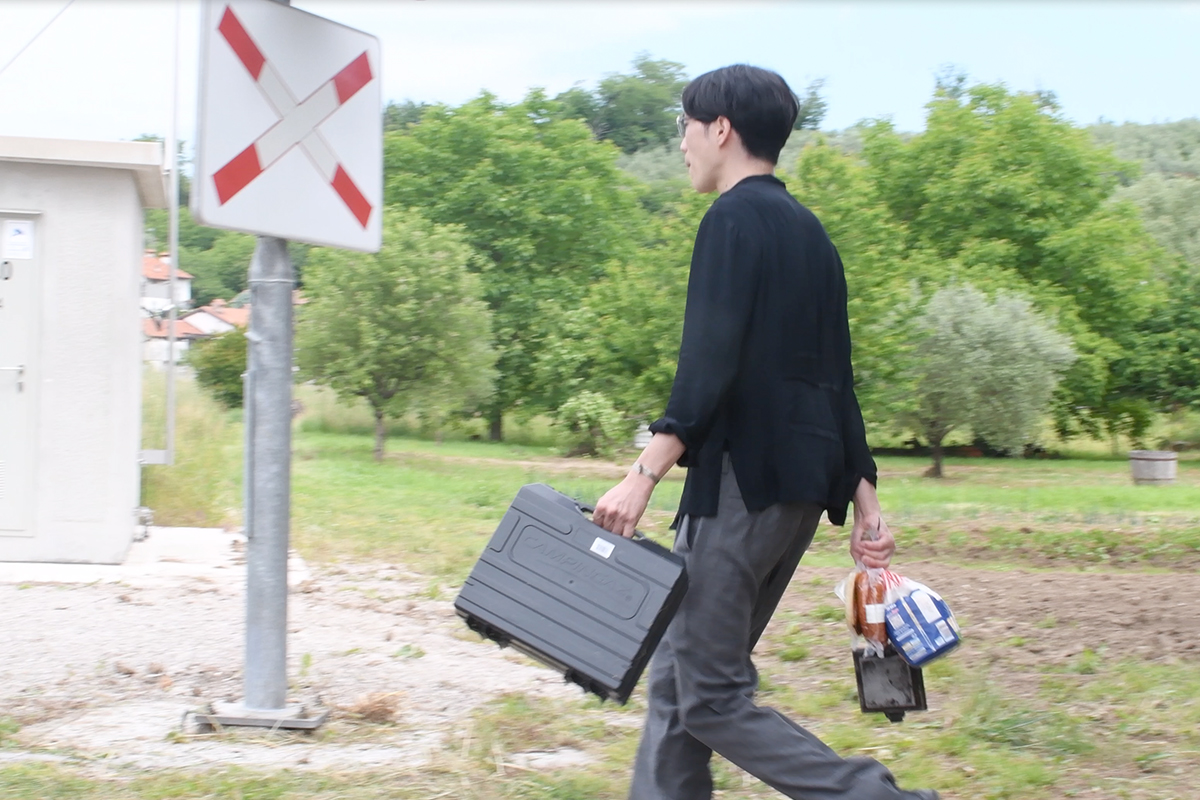
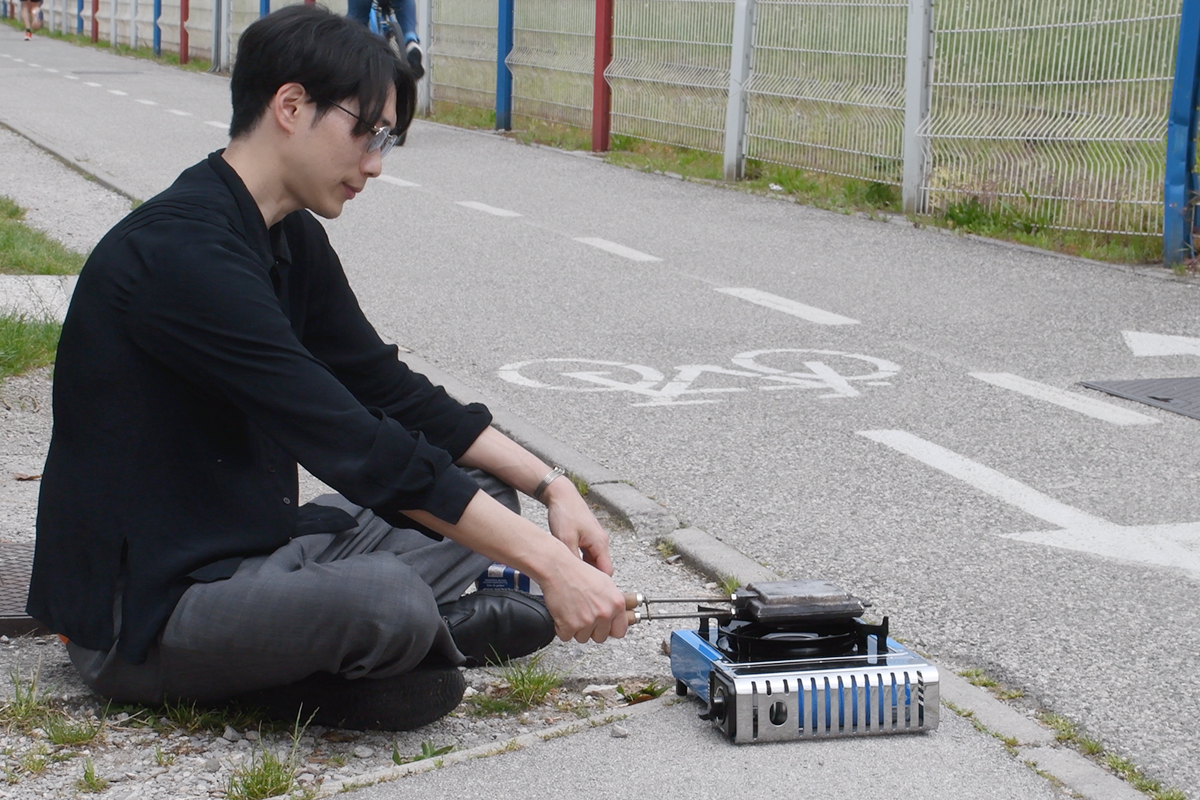
During the residency, I staged a performance from Hot Sandwich Makers Club, a project I have been developing since 2022. Carrying a hot sandwich maker engraved with the words “I’M FROM HUMAN”—spoken by a young man from Uzbekistan I met in Berlin—I toasted a sandwich on the line between two cities that were once one. This page records what I researched for the performance and what I confirmed by walking the ground.

Gorizia (Gorica in Slovenian) was under the Habsburgs from 1500 until the First World War, apart from a period of French rule under Napoleon (1809–1813), and was a town where Italian, Slovenian, Friulian and German were all spoken. It was here that Charles X, the last Bourbon king of France, came in exile after the July Revolution, and here that he died in 1836. During the First World War the town lay on the fiercely contested Isonzo (Soča) Front, and afterward it became part of Italy.
The town was split in two after the Second World War. In May 1945 the Yugoslav army occupied Gorizia for about forty days, after which the town came under Anglo-American military government. The border was chosen from lines proposed separately by the United States, Britain, France and the Soviet Union: the compromise “French Line” was adopted and then fixed by the Paris Peace Treaty of 1947. The old town remained in Italy, while about 40 percent of the municipality and the railway station were cut off on the Yugoslav side. To replace the urban center it had lost, Yugoslavia began building a new town just east of the border in 1948: Nova Gorica, “New Gorica.”
At first the border was almost impossible to cross. When it opened for a single day on August 13, 1950, crowds from the Yugoslav side poured into Gorizia to buy everyday goods that were hard to find at home. The sight of people heading back with brooms held high gave the day its name: the Sunday of the Brooms. After the Udine Agreement of 1955, residents of the border area could cross with a pass (lasciapassare / prepustnica). When Slovenia joined the EU in 2004, the fence dividing Transalpina Square in front of the station was taken down, and with Slovenia’s entry into the Schengen Area in 2007, border checks disappeared altogether.


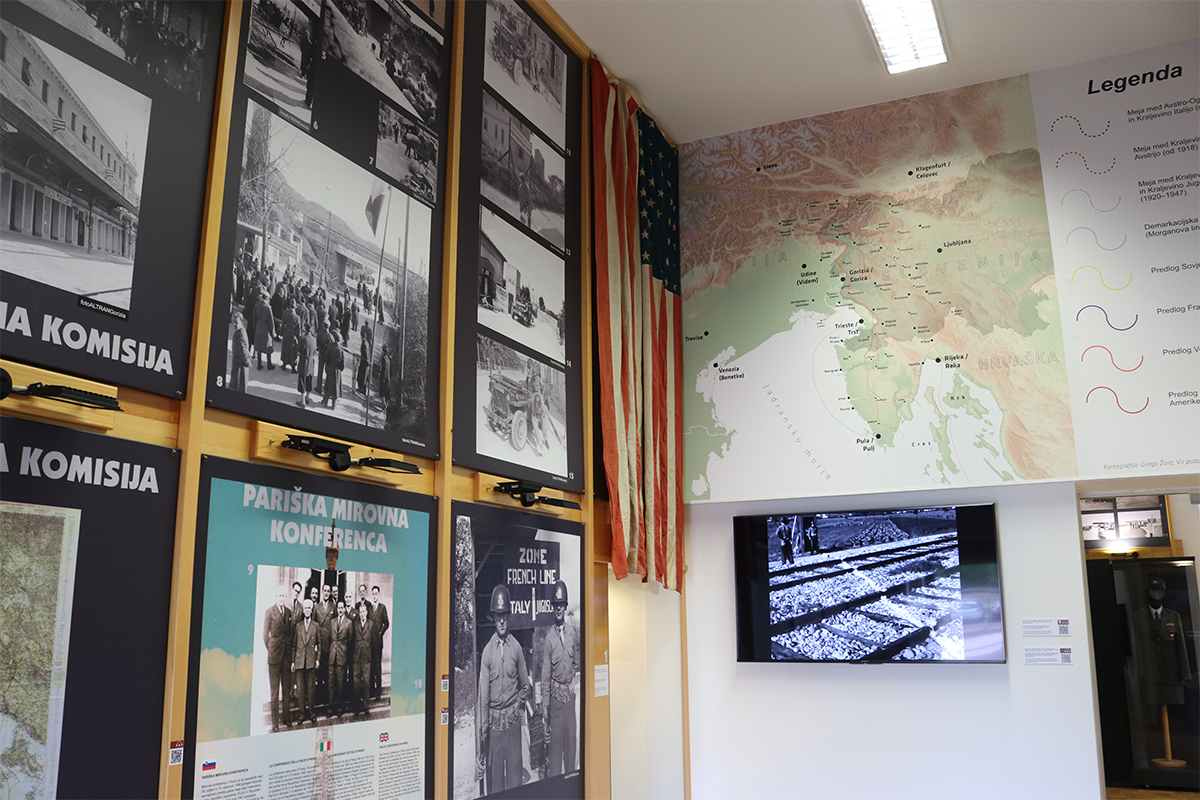
At the Pristava Museum Collection (Muzejska zbirka Pristava), housed in the former Pristava border-crossing building on the Nova Gorica side, a faded American flag hung in one corner of the display on the postwar border. One of the photographs on show depicts helmeted soldiers standing in front of a sign reading “ZONE / FRENCH LINE / ITALY | JUGOSL…”. This town’s border was drawn not only between Italy and Yugoslavia, but also at the negotiating tables of distant great powers.
The performance took place along the road that follows the railway tracks along the border, from the former Casa Rossa crossing to the Rafut crossing. Casa Rossa was the main crossing where crowds surged through on the Sunday of the Brooms; its name (“red house”) comes from a red-walled trattoria that once stood here. Rafut was a small crossing open only to residents holding passes, and a story is told that when the line was drawn in 1947, a house on this street ended up in Italy and its stable in Yugoslavia. Today it is a small museum on the history of the border pass.


For the filling, I chose foods that represent each side of the border. At a supermarket on the Slovenian side I bought kranjska klobasa (Carniolan sausage), which could be called Slovenia’s national dish. Its name comes from Carniola (Kranjska in Slovenian), a former Habsburg duchy, and it received EU Protected Geographical Indication (PGI) status in 2015. On the Italian side I chose frico, a Friulian specialty of cheese and potatoes cooked together.
The bread was Morato’s thick-sliced “American TEXAS TOAST,” sold in a bag printed with the Stars and Stripes. I chose it after seeing the American flag at the Pristava museum. When I asked a staff member why an American flag was on display, the answer was “America is everywhere”—a phrase that stayed with me.


The performance itself was simple: I cooked the sausage on the Slovenian side, carried it across the border into Italy, and put it together with the frico into a single sandwich.

After the residency, I edited the material, including footage shot by the Buzz staff, into the video work HOT SANDWICH MAKERS CLUB – I’M FROM HUMAN – Gorizia–Nova Gorica (June 2025), which is published on the AROUND interactive map.
References
- Associazione Culturale Buzz – AROUND
- GO! 2025 – The March of the Brooms
- Let’s GO! Gorizia – Casa Rossa border
- Let’s GO! Gorizia – Rafut border crossing
- Nova Gorica – Wikipedia
- Transalpina / Europe Square – Wikipedia
- Goriški muzej – Museum Collection Pristava
- Digitalni arhiv Nove Gorice – Paris Peace Treaty
- Morgan Line – Wikipedia
- Franciscan Monastery Kostanjevica – Tombs of the Bourbons
- Princely County of Gorizia and Gradisca – Wikipedia
- RTV SLO – 60 let od Videmskega sporazuma
- Italia.it – Museo del Lasciapassare / Prepustnica
- GO! 2025 – Wikipedia